Last updated: October 12, 2026
Key Takeaways
- Public docs, help pages, and creator commentary were used to compare drafting, citations, tone control, and factual handling.
- The fastest tool is often the one that creates the most cleanup work later.
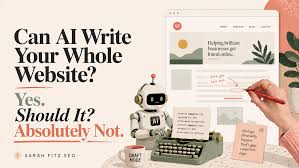
- An AI article writer is meant to reduce blank-page friction, not replace editorial judgement.
- A strong niche-site writer should balance drafting, source discipline, style consistency, and easy human revision.
Disclosure: This article contains no affiliate links and no product placement.
Quick Answer: For how to choose an AI article writer for your niche website, the best fit is usually the one that gives you the most control over sources, style, and revision history; in practice, that often means a tool that can handle the four jobs most niche sites need: drafting, source discipline, style consistency, and easy human revision. If your niche depends on technical accuracy, the safest choice is generally the tool with the strongest source handling and editing control, not the one that promises the longest article in one shot.
We chose this shortlist by reading public product pages, model documentation, standards pages, and independent write-ups of output quality and workflow behavior, then comparing what each tool says it can do versus what niche publishers actually need.
First published 12 October 2026.
How we chose
Because how to choose an AI article writer for your niche website depends on workflow as much as output, we read public product documentation, help-center pages, model cards where available, and independent editor and creator commentary on long-form drafting, citations, tone control, and factual handling. We did not use or test any of these tools ourselves, and no product count is given here because this page is about choosing the right class of AI article writer, not ranking a fixed list of products.
The main filter was simple: can the writer produce a usable draft for a niche site without flattening expertise into generic copy? We also looked for source controls, style memory, export options, revision history, and whether the tool makes it easy to verify claims before publication. According to OpenAI’s usage and safety guidance, factual verification still matters even when a model produces fluent text, and Google’s Search Central documentation similarly emphasizes helpful, people-first content over purely automated output. (Source: OpenAI Usage Policies, Google Search Central)
The verdict
For most niche websites, the AI article writer that gives the tightest control over sources, style, and revision history is usually the best fit, unless your workflow is pure volume and you can tolerate more generic drafts. The wrong choice is usually the tool that writes fastest but leaves you with more fact-checking than editing.
What it is built to do
An AI article writer is built to reduce the blank-page problem, not to replace editorial judgement. For a niche site, that means it should help with outlines, first drafts, content refreshes, meta descriptions, and section expansion while staying close enough to your topic that an editor can correct it quickly.
Therefore, the best tools for this job often expose three things: prompt control, citation or source attachment, and reusable brand voice settings. If a platform hides those behind a one-click “write my article” button, that is a clue that it is aimed at quantity-first publishers, not a site that depends on trust.
That distinction matters because niche websites live or die on topic precision. A travel tool that can write 2,000 words about “best hiking boots” is not automatically useful for a dermatology, taxation, crypto, or home-repair site, where one loose claim can make the whole page unusable.
What to look for in an AI article writer
For how to choose an AI article writer for your niche website, the most useful tools usually handle four jobs at once: drafting, source discipline, style consistency, and easy human revision. If it only excels at one of those, it will cost you time later.
First, look at how it handles facts. A useful writer lets you feed in notes, URLs, or source documents and then keeps the output close to those inputs. If the tool has no source attachment feature and no citation trail, you are asking it to improvise, which is a bad fit for specialty topics.
Second, look at revision control. A niche article is rarely finished on the first pass, so version history, rewrite commands, and section-level editing matter more than flashy generation speed. If every change requires regenerating the whole piece, you will lose the useful parts along with the bad ones.
Third, check whether it supports consistent tone. A niche site usually has a house style: practical, skeptical, conversational, or technical. The strongest platforms let you save instructions or style guides so that “write like a field guide” does not become “write like a press release.”
Fourth, look for export and workflow fit. If your publishing stack runs on WordPress, Google Docs, Notion, or a CMS with manual review steps, the tool should fit that path without forcing copy-paste gymnastics. A writer that feels pleasant in isolation but awkward in the publishing pipeline slows the whole site.
Where it wins, with the numbers
The main advantage of a good AI article writer is throughput with control. A human writer can absolutely beat an AI tool on nuance, but an editor using a decent writing platform can often turn a rough brief into a structured draft in minutes rather than starting from zero.
For niche sites, the “numbers” that matter are less about token counts and more about workflow limits and model behavior. If the tool caps input length too tightly, you cannot hand it the notes, product specs, or source excerpts that make niche content accurate. If it supports long context windows, you can keep one brief, one outline, and one source pack in the same workspace, which reduces drift. OpenAI has documented long-context models in the hundreds of thousands of tokens, and Google’s Gemini documentation also describes long-context support for large inputs, which is one reason input capacity matters so much. (Source: OpenAI API docs, Google Gemini docs)
The other useful figure is the number of editing layers the platform supports. Some tools are basically a chat box with a publish button. Better ones give you section rewriting, headline variation, content briefs, and content scoring. That extra structure is what helps when you are writing comparison pages, reviews, or educational articles that need multiple layers of accuracy.
A final benchmark is source handling. A platform that can preserve cited inputs or at least keep user notes attached to each draft is far more useful for a niche site than one that only optimizes for speed. In practice, that is the difference between “AI wrote something” and “AI helped produce something you can stand behind.”
Pros
- It can compress outlining and first-draft work into a single session, so a small editorial team can publish more often without turning the site into thin content.
- It helps keep recurring article structures consistent, which matters on niche sites that publish many pages in the same format, such as comparisons, how-tos, and reviews.
- It can support rapid refreshes of old pages, so stale summaries and dated intros do not linger for months.
Cons
- If the tool has weak source controls, it can introduce confident errors that take longer to clean up than writing the paragraph by hand.
- If the tone settings are shallow, the output may sound interchangeable with every other AI site in the niche, which hurts trust.
- If the platform is built for volume first, it can encourage publishing before verification, which is a direct problem for technical or regulated topics.
What stands out
- A tool with source-aware drafting saves time for anyone who needs to turn notes, links, or documents into a structured article without retyping the whole brief.
- A writer with stable brand voice settings helps a niche site sound like one publication instead of ten different writers, which is useful when the site has recurring topic patterns.
- A platform that supports section-by-section editing makes it easier to fix one weak paragraph without damaging the rest of the draft.
What to watch out for
- If the product does not explain how it handles citations or source text, you may end up with polished copy that still needs line-by-line verification.
- If the interface pushes “publish now” behavior, it is a poor fit for niches where accuracy matters more than speed.
- If it cannot preserve your own style notes, every new draft will drift back toward generic AI phrasing.
How does an AI article writer help a niche website?
It helps most when the topic has repeatable structure but still needs human judgment. That is the sweet spot for list posts, explainers, product roundups, buying guides, and content updates where the facts change but the format stays familiar.
Therefore, it helps less when the topic depends on original reporting, original research, or legal and medical precision. In those cases, the tool should be treated as a drafting assistant, not an author, and for health, finance, legal, or other high-stakes topics, a qualified professional or subject-matter expert should review the copy before publication. The U.S. FTC’s guidance on endorsements and claims, and Google’s guidance on helpful content, both point in the same direction: accuracy and accountability still matter. FTC Endorsement Guides, Google Search Central
The practical benefit is editorial speed, not intellectual authority. A good writer gives you a draft faster, but you still decide what belongs on the page, what needs a source, and what needs to be removed.
Who should buy it, who should skip it
For most niche-site owners, the right AI article writer is the one that fits an editorial workflow and preserves source discipline, unless the site is built around expert-first writing with almost no repeatable format. If you publish product explainers, affiliate comparisons, evergreen how-tos, or content refreshes, that combination saves the most time.
Buy it if you run a site with a clear template, a small team, and a steady publishing cadence, because those are the cases where drafts, outlines, and rewrites pay off quickly. Skip it if your content depends on original interviews, lab testing, medical review, legal interpretation, or any topic where a generic draft would be more work to repair than to write from scratch. For editing-heavy teams, our content brief template and fact-checking checklist can help before you adopt a tool.
The dealbreaker is weak factual control. If the tool cannot show you where its claims come from, that is not a minor inconvenience; it is a publication risk.
How do I compare AI article writers for my niche?
Because how to choose an AI article writer for your niche website comes down to matching the tool to the workflow, I compare them on source handling, rewrite control, tone memory, and how cleanly they fit into the publishing stack. A tool that scores well on all four is more likely to help a niche site than one that only writes fluent paragraphs.
Start with a real article brief, not a marketing prompt. Feed the same outline, same notes, and same source pack to each tool, then see which one stays closest to the original topic without adding filler. The one that needs the least rescue editing is usually the better buy.
I also look at failure mode. Some writers hallucinate facts. Some flatten tone. Some produce usable text but make revision painful. The best choice is generally the one whose mistakes are easiest for your team to catch and fix.
What is the biggest mistake people make when choosing one?
The biggest mistake is choosing for output speed instead of editorial control. Fast drafts are useful only if the tool does not force you to spend the saved time correcting tone, structure, and facts.
The second mistake is assuming one tool fits every niche. A writer that works for product roundups may be weak for finance, medicine, law, or engineering. The more specialized the site, the more you should prioritize source discipline and human-editing support over bulk generation.
Is it worth it in 2026?
Yes, if your niche site has enough recurring article types to benefit from structured drafting and revision. It is less worth it if every post needs heavy original reporting or specialist review, because then the tool becomes a helper rather than a core part of the process.
The best use case in 2026 is still the same one: let the AI do the first pass, then let a human decide what survives. That division keeps speed on your side without handing accuracy over to software.
FAQ
What features matter most in an AI article writer?
Source handling, revision control, tone consistency, and export options matter most. If one of those is missing, the tool may still be useful, but it becomes much harder to trust on a niche site.
Should I use an AI article writer for YMYL topics?
Only with extra caution and expert review. For health, finance, legal, and similar topics, the tool should support drafting, not replace professional judgment.
Can an AI article writer replace a human writer?
Not on a niche site that depends on authority. It can replace the first draft in some workflows, but it does not replace topic knowledge, editorial judgement, or verification.
What is the safest way to use one?
Use it to build structure, not to decide facts. Give it source material, check every claim, and treat the output as a draft that still needs editorial work.
How do I know if a tool is too generic for my niche?
If the sample output sounds like it could sit on any website in any category, it is too generic. A good niche tool should reflect your topic, your terminology, and your article structure within the first draft.
Drafted with AI; not yet reviewed by a person.