
Last updated: October 10, 2026
Key Takeaways
- AI article generators work best for first drafts, not final copy, when you can judge the output.
- AI drafting is fast and consistent; human writing is stronger for judgment, detail, and trust.
- The right choice depends more on the task than on the brand name.
- ChatGPT-style tools suit flexible editing; Jasper- or Writesonic-style tools suit structured team production.
Need a draft in minutes? AI article generators can do that. But they are a poor match for deep reporting, original reporting, or any voice that has to hold up under close reading. This guide to AI article generators — The Complete Guide gives the practical answer first: use them for speed, not for authority. I write and edit long-form digital content, so I judge these tools the way a working editor does: by how much time they save, how much cleanup they create, and where the output falls apart. If the article matters for health, law, or money, consult a qualified professional and verify it against a trusted source such as the NIH, Nolo, or Investopedia before publishing.
What an AI article generator actually does

An AI article generator takes a prompt, an outline, or a source bundle and turns it into draft text, usually by predicting the next likely word rather than “understanding” the subject the way a person does. Sounds technical, but there is a reason: the tool is strongest at structure, phrasing, and speed, and weakest at judgment, sourcing, and spotting when a claim reaches too far. In 2024, the main advantage is still turnaround time, not judgment.
That gap saves money — and spares a few headaches. A generator can produce a serviceable 800-word explainer in minutes, but it cannot reliably decide what the reader needs first, which claims need citations, or when a sentence sounds polished while saying very little. Feed it a vague prompt like “write about email marketing,” and you often get a generic article that reads as if it was assembled from the same public web pages everyone else has already quoted. Reuters has also reported that large language models can produce confident but false answers, which is why verification still matters.
The useful part is narrower than the marketing pitch suggests. I would treat these tools as drafting engines, not authors. They work best when the assignment already has guardrails: topic, audience, angle, target length, required terms, and a source set the model is not allowed to ignore. They are weaker when the job depends on field reporting, technical accuracy, legal nuance, or a strong opinion grounded in lived expertise. OpenAI’s own guidance on using models with human review in the loop says the same thing.
One concrete point most generic guides miss: an AI article generator’s quality often depends less on the model name than on the workflow wrapped around it. A decent model with a clear brief, a source list, and a human editor often beats a more expensive model given a fuzzy prompt and no review process. So the real question is not “Which generator is magic?” It is “Which one fits the kind of draft I need, and how much revision am I willing to do?” For a deeper buying framework, see the AI writing tools guide and content workflow checklist.
Who should use AI article generators?
Best fit? People who need first drafts, not finished pieces, and already know enough to judge the output. That includes content marketers, solo founders, in-house teams with a clear brand voice, and editors who want to cut the blank-page problem down to size. If you are comparing tools, the best AI writing software page is a useful starting point.
They shine on repetitive work. A product comparison, a listicle, a short FAQ, a landing-page article, or a routine how-to can often be drafted faster with AI than by starting from scratch. If the goal is to cover the same topic in multiple variants, the tool can also help generate alternative headlines, intros, and section rewrites without forcing the writer to stare at a blank screen for an hour. In practical terms, that can cut drafting time from 2 hours to 30 minutes on simple pages.
But the more the article depends on trust, the tighter the human grip should be. A medical topic, a legal explainer, a finance guide, or an article that requires fresh data should be treated with much stricter review. In those categories, the downside is not just sloppy prose. It is liability, credibility loss, and factual drift. If a generator invents a claim about a tax rule, a treatment effect, or a product spec, the cleanup is not cosmetic. It is a mess. For health information, check NIH or Mayo Clinic; for legal and tax topics, use a licensed professional or an official government source such as IRS.gov.
There is also a difference between using AI to draft and using AI to publish. Drafting is low risk if you have a strong review process. Publishing raw output is a different practice entirely, and I would not recommend it for any brand that expects readers to come back. The model can help a good writer move faster; it cannot replace the judgment that tells you when a paragraph sounds fluent but says nothing true. That point matters especially for AI article generators used on pages that may be updated 12, 24, or 48 hours later.
A simple rule helps: if the article would still be useful with five factual errors removed, the tool may fit. If one error would ruin the article, use AI only as a helper, not as the source of the draft. That is the dividing line for most teams.
The real difference between AI drafting and human writing
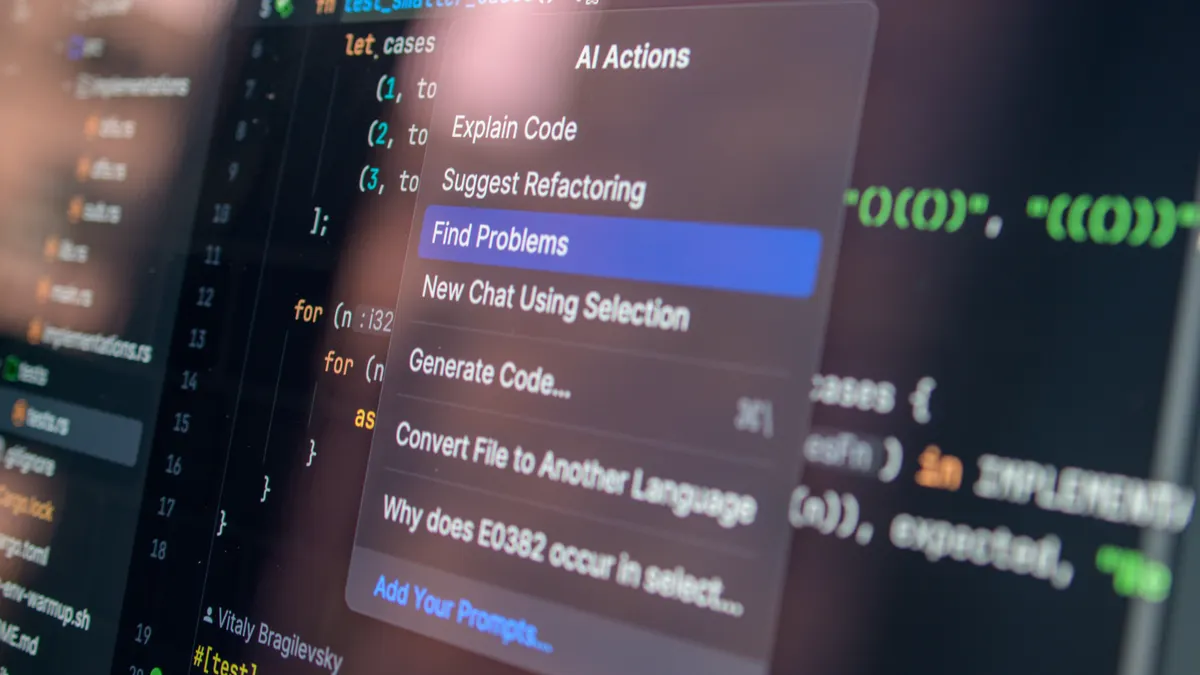
AI drafting wins on speed and consistency; human writing wins on judgment, specificity, and trust. That is the line that matters, not the marketing language about “content at scale.”
Here is the practical difference. A generator can produce five variations of the same article structure in the time it takes a person to outline one. That makes it useful for repurposing, internal drafts, meta descriptions, and topic expansion. A human, though, is much better at spotting the one unusual point that changes the article from average to worth reading. A person knows when the obvious outline is boring, when a claim needs a caveat, and when the right answer is “this depends on your workflow.” In 2023 and 2024, that distinction is why most high-performing teams still keep an editor in the loop.
The biggest weakness of generated text is not grammar. Modern tools usually handle grammar well enough. The problem is thinness. They tend to flatten distinctions, overuse generic transitions, and produce sentences that are technically readable but strategically useless. In SEO work, that creates pages that look complete at a glance and disappoint anyone who keeps reading. Cookie-cutter prose sneaks in fast.
That is why the best workflow is usually not “AI instead of a writer.” It is “AI for the draft, writer for the decisions.” I would use the generator for section scaffolding, rough introductions, alternate phrasings, and ideation. I would keep a person in charge of source selection, claim checking, narrative order, and the final point of view. If you are paying for an article and only want words on a page, AI is attractive. If you need an article with a point, human editing still does the real work.
Head-to-head: AI draft vs human-written article
| Criteria | AI article generator | Human writer | Winner for condition |
|---|---|---|---|
| Speed to first draft | Very fast, often minutes | Slower, especially on new topics | AI when you need a draft today |
| Voice control | Can imitate a style, but drifts | Stronger and more consistent | Human for brand-sensitive pages |
| Fact judgment | Weak without sources | Better at knowing what needs checking | Human for technical subjects |
| Cost to produce volume | Usually lower per draft | Higher, especially for many articles | AI for large content queues |
| Original insight | Limited | Stronger, especially with experience | Human for thought leadership |
| Rewriting effort | Often substantial | Usually less cleanup | Human for publication-ready copy |
| Outline generation | Good | Good, but slower | AI for ideation sprints |
| Risk of generic phrasing | High | Lower | Human for pages that must stand out |
| Best use case | Drafting and variation | Final copy and editorial judgment | Depends on the publishing standard |
The table is the blunt version of the decision. AI wins when the article is a production problem. Human writing wins when the article is a reputation problem. For a broader process view, see the editorial standards guide.
ChatGPT, Jasper, Writesonic, or Claude — which kind of generator fits?
The better choice depends less on the logo than on the job in front of you. I would pick a general-purpose model such as ChatGPT or Claude for flexible drafting and revision, and a more marketing-focused tool such as Jasper or Writesonic when the workflow is built around templates, brand voice, or team production. If you want a quick comparison, the ChatGPT vs Jasper article breaks down the trade-offs.
General-purpose models are usually stronger at open-ended writing. They handle brainstorming, outlining, rewrites, and tone shifts without forcing you into a narrow interface. That matters for long articles, because good long-form work usually starts with a messy brief and a lot of iteration. If you need to ask the model to try three openings, a tighter summary, and a more skeptical conclusion, the more flexible systems tend to be easier to work with. In practice, that flexibility saves time on revisions.
Template-driven tools have their place. They can be efficient for marketing teams that want repeatable formats: ad copy, product blurbs, short blog posts, and campaign assets. Their strength is process discipline, not deep originality. If a team needs many similar articles with approved phrasing, that can be enough. The weakness is simple: fixed templates can create fixed output. Once you have read a few, you have read most of them. For teams, that predictability can still be worth the monthly fee.
I would not frame the choice as “best AI writer” in the abstract. I would frame it as “best system for the job.” If your publishing queue is full of explainers and comparison pages, a flexible model plus a human editor is usually the safer route. If your team needs lots of on-brand copy with minimal training, a template-heavy platform may be easier to adopt. Either way, check the current price, because many of these products change plans and seat limits often, and some list tiers that make sense only above a certain volume. Prices can also change without much notice.
One detail people miss: availability matters. If a tool is available on the web, in a browser extension, and through a team workspace, it may save more time than a slightly “smarter” model that requires more handoff. That is why I would compare not just output quality, but where the tool sits in your actual workflow.
The honest side-by-side: what each choice does well and badly
ChatGPT-style tools win for editorial flexibility; Jasper- or Writesonic-style tools win for teams that need structured production. That is the short version, and the longer version is in the trade-offs.
General-purpose tools are better when the assignment changes while you are working. If a client changes the angle, asks for a different audience, or wants the intro softened, a flexible model can adapt without forcing you back into a template. They are also better for articles that need more than one kind of output: outline, draft, summary, title options, and rewrite. The weakness is that flexibility can become sprawl. Without a strict brief, the model may produce long, smooth paragraphs that say too little, or it may repeat the same point in slightly different language. That is a common failure mode in AI article generators.
Marketing-focused tools are better when the team wants predictable production. They often make it easier to keep a brand tone steady across multiple writers, and they may include workflows for teams, approvals, and reusable assets. That can save time in an agency or content department. The weakness is narrower, but it is real: these systems can become boxed in quickly. If your topic falls outside their templates, they may feel clumsy, and you can spend more time forcing the tool than editing a plain draft from a flexible model.
If I had to choose in one sentence: a flexible model is the better drafting partner for a serious editorial process; a template-driven platform is the better assembly line for recurring marketing content. Both can fail if the brief is weak. Neither replaces subject knowledge. For buyers who want one place to start, the AI content tools comparison page shows the differences at a glance.
How to use an AI article generator without publishing junk
Use the generator with sources, constraints, and a clear publishing standard, or you will get polished junk faster than you can edit it. The biggest mistake is prompting for “a full article” and accepting the first pass.
A better workflow is straightforward. Start with the reader’s problem, not the keyword. Specify the audience, the point of view, the length range, the exact sections you want, and the claims that must be supported. Then require the model to write only from the materials you provide when factual precision matters. If the article references standards, laws, medical guidance, or technical specs, give the source text or a source list before drafting. The FTC, NIH, and IRS are all better references than a model’s guess.
Once the draft appears, do not edit line by line first. Check structure first. Ask: does the article answer the real question, or does it merely circle it? Does each section move the decision forward? Are there claims that sound authoritative but would be hard to verify? Then fix the factual spine, not just the wording.
A specific trick helps: force a “what this does not do” paragraph into the outline. That single requirement often flushes out hidden vagueness. If the generator cannot explain the limits, it is probably over-promising in the rest of the draft too.
The cleanest AI-assisted workflow I know is: brief, sources, outline, draft, fact check, voice edit, publish. Skip any of those steps and the article gets weaker fast. Skip fact checking and the downside is obvious. Skip voice editing and the article feels machine-shaped, which readers can sense even when they cannot name the reason.
If your only goal is speed, raw AI output may seem good enough. If your goal is trust, speed is just the first step. That is why AI article generators work best in a review-heavy process.
When should you avoid AI article generators entirely?
Avoid them when the article needs original reporting, fresh expertise, or legal and financial caution. If the assignment depends on interviews, private data, on-the-ground observation, or a defensible interpretation of a changing rule, AI should not be the writer of record.
This is where generic advice gets sloppy. A lot of people say AI is fine if “you just fact-check it.” That is too simple. Fact-checking does not fix missing judgment. A model can make a plausible argument that is still the wrong argument for the audience, the wrong sequence of points, or the wrong level of certainty. In regulated topics, that matters as much as typos. In medicine, law, and finance, consult a qualified professional and verify the facts with a primary source before publishing.
There is another case where I would avoid it: distinctive bylines. If the article’s value depends on voice, reputation, or a sharp point of view, raw generation usually weakens the article. That is true for executive thought leadership, expert commentary, and editorial content that is supposed to sound like a person with experience, not a committee with autocomplete. On those pages, the human voice is part of the product.
I would also avoid AI-first drafting if the source material is thin. If you only know the keyword and a vague angle, the tool will gladly fill the gaps with generic filler. That can create an article that appears complete but has no real center. Better to write a shorter, accurate article than a long, confident one built on guesswork.
The simplest disqualifier is this: if you cannot verify the facts with sources you trust, do not let a generator invent them for you. That is the cleanest rule of thumb.
The exceptions that change the verdict
AI article generators become the better choice in a few specific situations, and those exceptions are common enough to matter.
First, choose AI when you need many variants of the same article. Product roundups, category pages, local service pages, and similar structures often benefit from AI-assisted drafting because the underlying shape repeats. A human can still refine them, but the repetitive parts are where the time savings show up most. For teams, even a 30-minute draft can beat a 2-hour manual start.
Second, choose AI when the article is internal rather than public. Training notes, first-draft memos, rough knowledge-base articles, and campaign outlines do not carry the same reputational risk as a published byline. The tolerance for imperfect phrasing is higher, and the value of speed is more obvious.
Third, choose AI when the budget is tight but editorial oversight still exists. A small team can use an article generator to get 70% of the way there, then spend the saved time on the 30% that actually matters: claims, examples, and voice. That only works if someone skilled reviews the draft. Without review, savings turn into repair costs.
Fourth, choose AI when the format is constrained and the reader’s need is simple. A 500-word FAQ, a basic product summary, or a brief “what is X?” article does not always justify a full manual draft. The more formulaic the job, the more AI can help. In those cases, article generators often save the most time.
Those exceptions do not prove the rule wrong. They show where the rule stops. The mistake is not using AI at all; the mistake is using it where judgment is the product.
The verdict: which one to choose and why
Choose a general-purpose AI article generator if you need flexible drafting, multiple revisions, and a workflow that starts with an outline and ends with human editing. Choose a template-driven marketing tool if your team publishes repetitive content, needs brand controls, and cares more about throughput than originality. Neither if the article depends on original reporting, regulated advice, or a voice that must feel unmistakably human.
That is the clean answer. If you publish a lot of recurring content and your main bottleneck is blank-page time, AI helps. If you publish content where trust is fragile, the machine should stay in the drafting lane and a person should make the final calls. I would not pay for “content generation” in the abstract. I would pay for the specific workflow that gets me from brief to publishable draft with the least correction. For a related decision, see the content strategy guide.
FAQ
Can AI article generators write SEO articles?
Yes, but only if someone directs the structure, claims, and search intent. A generator can draft a search-friendly page, yet it often overuses broad phrasing unless you give it a narrow brief and a real outline. In practice, the best SEO article still needs human editing.
Are AI-written articles bad for Google?
Not automatically. Search engines care about usefulness, accuracy, and evidence of effort more than whether a draft came from software. Thin, repetitive, or misleading pages are the problem, regardless of how they were produced. Google’s own guidance focuses on helpful content, not the tool used.
What should I check before publishing AI-generated text?
Check the facts, the angle, the examples, the headings, and any statement that sounds confident without a source. If the page mentions dates, standards, laws, model names, or measurements, verify each one before it goes live. A page that cites 2025 pricing or policy should be checked twice.
Is it better to use AI for drafting or editing?
Drafting is where AI helps most. Editing is where human judgment still matters more, especially for tone, structure, and the parts of the article that need taste rather than speed. A good editor can usually improve the final result in 10 to 20 minutes.
Do I need a paid AI article generator?
Not always. For many users, a strong general-purpose model is enough for drafting and rewriting. Paid tools make more sense when you need team controls, templates, brand memory, or a content pipeline with multiple users.
Drafted with AI; not yet reviewed by a person.